
Best AI Recruitment Tools – The 2025 Guide to Smarter Hiring
Hiring in 2025 feels like a high-stakes race for talent. Imagine sifting through hundreds of resumes at 2 AM, searching for that perfect candidate – a daunting task for any startup founder. Now picture having a digital recruiting assistantworking tirelessly by your side, automating mundane tasks and flagging top candidates in seconds. That’s the promise of today’s Best AI Recruitment Tools. They don’t just speed up hiring; they transform it – making the process more efficient, data-driven, and even enjoyable. In this comprehensive guide, we’ll explore leading AI-driven recruiting software, compare their features, share key insights (with real-world stories), and show how they empower you to hire better and faster.
Let’s dive in with a quick example: A growing startup was drowning in applications for a remote developer role. By deploying an AI screening tool, they automatically filtered out 70% of unqualified resumes, scheduled interviews via chatbot, and filled the position in half the usual time. Such success stories are increasingly common, and as you’ll see, AI recruitment isn’t a far-off future – it’s here right now, reshaping how companies find talent.
Introduction: Why AI Recruiting Is a Game-Changer
Modern recruitment is undergoing an AI revolution, and it’s happening across companies of all sizes. Startups and Fortune 500s alike are embracing AI to tackle their toughest hiring challenges. Why now? The technology has matured to a point where even lean teams can leverage powerful algorithms and intuitive AI platforms without needing a PhD in data science. Moreover, the pandemic-accelerated shift to remote work and digital hiring pushed recruiters to seek smarter tools to stay competitive. The result is an explosion of AI recruiting solutions that automate repetitive tasks, surface hidden gem candidates, and reduce human bias – all while giving recruiters more time to build relationships.
By 2024, 87% of companies had incorporated some form of AI into their recruitment processes, leaving only a small fraction yet to fully adopt these innovations. For startup founders, this means competitors are likely already using AI to gain a hiring edge, from writing job descriptions to screening candidates. Keeping pace isn’t just nice-to-have – it’s essential.
The influence of AI on daily work life is only growing. By 2025, an estimated 70% of employees will interact with AI-powered tools daily, whether through AI-driven recruiting software, chatbots that answer HR questions, or smart assistants scheduling their meetings. In recruitment, this ubiquity translates to faster communication with candidates and data-driven hiring decisions made every single day.
But with so many tools on the market, how do you know which ones are truly the “best”? In the next section, we compare top AI recruitment platforms head-to-head, so you can find the perfect fit for your needs. We’ve organized it into a handy comparison table, followed by key insights on each tool. Let’s explore the Best AI Recruitment Tools and what makes them stand out.
Comparison of the Best AI Recruitment Tools
Choosing the right AI tool can feel overwhelming given the plethora of options. To simplify your decision, we’ve compiled a comparison table of 6 top AI recruitment platforms. These tools have been selected for their strong feature sets, positive user feedback, and the unique value they offer – whether it’s automating resume screening, engaging candidates via chatbot, or analyzing interviews. Below, you’ll find each tool’s key features, ideal use case, and a note on pricing. This birds-eye view will help you quickly narrow down which solutions might suit your startup or organization.
| Tool | Key Features | Best Use Case | Pricing |
|---|---|---|---|
| Workable AI-Powered ATS | AI job description generator; automated resume screening; one-click interview scheduling; integrates with video interviews. | All-in-one hiring for startups and SMEs that need an ATS with built-in AI to streamline posting-to-hire. | Free trial; paid plans from ~$169/month (Starter) for small teams, scaling up by company size. |
| ParadoxConversational Assistant | “Olivia” AI chatbot for 24/7 candidate Q&A; instant interview scheduling via text; supports high-volume hiring workflows; integrates with HR systems (Workday, etc.). | High-volume recruiting (e.g. retail or frontline roles) where a chatbot can handle thousands of applicants and free up recruiters. | Quote-based (enterprise pricing); ROI seen in saved recruiter hours – e.g., saved $2M in costs for General Motors. |
| Eightfold AITalent Intelligence | Deep-learning algorithms to match candidates to roles (and roles to candidates); talent rediscovery in your ATS; diversity analytics; career path and skill insights. | Enterprise talent management– great for larger firms or scaling startups aiming to reduce bias and tap internal talent pools intelligently. | Custom pricing on request; enterprise-level solution (often part of bigger HR suite integrations). |
| hireEZ (Hiretual) AI Sourcing Engine | Aggregates talent data from LinkedIn, GitHub, etc.; AI-powered candidate matching; email outreach sequences with templates; diversity sourcing mode. | Sourcing hard-to-find talent for recruiters and agencies who need to build talent pipelines across multiple platforms quickly. | Free basic plan; premium plans (Pro, Enterprise) available via quote, often starting around a few hundred $/month per recruiter. |
| HireVue AI Video Interviewing | Video interview platform with AI assessment of tone and keywords; on-demand interviews; coding and game-based assessments via acquisitions (e.g. CodeVue). | Structured candidate assessment – ideal for companies wanting to evaluate soft skills or programming skills at scale before in-person rounds. | Enterprise pricing, typically per interview or license; known for custom packages (used by firms like Unilever to screen thousands). |
| Manatal SMB-Friendly ATS | AI recommendations for candidate-job fit; social media enrichment of profiles; Kanban-style pipeline; easy collaboration for small teams. | Small businesses or agencies seeking an affordable ATS with modern AI features to improve hiring efficiency without complexity. | 14-day free trial; Paid plans from $15/user/month (annual billing) – highly affordable for startups on a budget. |
Table: A quick comparison of six best AI recruitment tools with their standout features, ideal use cases, and pricing. Each offers a unique angle – from Workable’s all-in-one simplicity to Paradox’s chatbot brilliance – so you can find a tool tailored to your needs.
Different Benefits of AI tools
As the table shows, these tools each shine in different aspects of the recruitment process. For example, Workable is great if you want to consolidate everything (sourcing, tracking, screening, even onboarding) in one platform augmented by AI. In contrast, hireEZ is laser-focused on sourcing, helping you find those “unicorn” candidates across the web. If you’re struggling with scheduling and candidate engagement, Paradox might be your best friend – its AI assistant can literally text candidates to set up interviews while you sleep, ensuring no qualified person falls through the cracks. And for enhancing quality-of-hire, HireVue and Eightfold provide advanced analytics: HireVue’s AI uncovers behavioral signals in interviews, while Eightfold’s algorithms predict a candidate’s future performance and potential fit.
Internal tip: If you’re new to HR tech, you might also want to check out our guide on implementing an ATS (Applicant Tracking System) for beginners, which covers integration tips for some of the tools above.
Next, we’ll dive into key insights gained from using these AI recruitment tools and others like them. Rather than just listing features, this section will explore how they tangibly improve the hiring process. We’ll use real-world examples and even a hypothetical user story to illustrate the personal impact of AI on recruiting. Whether you’re a skeptic or an enthusiast, these insights will paint a clear picture of AI’s value proposition in talent acquisition.
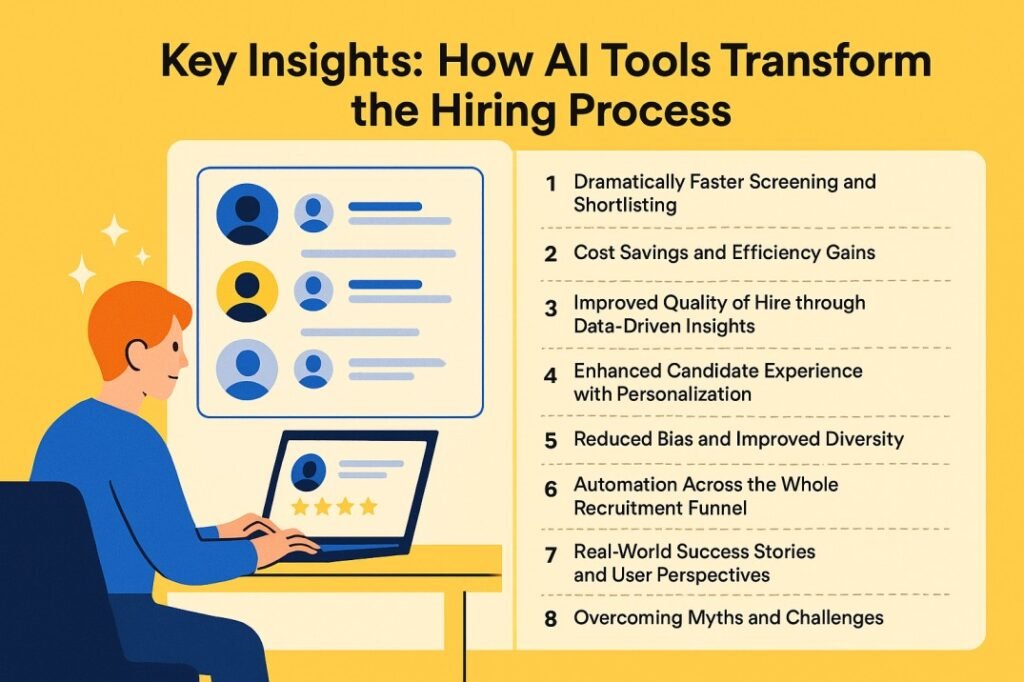
Key Insights: How AI Tools Transform the Hiring Process
Adopting AI in recruitment isn’t just about automating tasks – it’s about supercharging your entire hiring strategy. Based on industry reports and user experiences, here are the key ways AI recruitment tools are making a difference:
- Dramatically Faster Screening and Shortlisting: One of the biggest wins is time saved. AI can scan résumés 24/7 and filter candidates in minutes, a task that takes humans many hours. In fact, 75% of recruiters say AI tools speed up screening by quickly surfacing top talent. This means hiring teams can respond to applicants faster and move quality candidates through the pipeline before they get snapped up elsewhere. A hypothetical example is a startup founder, Alex, who used to spend days reviewing resumes for a marketing role. After deploying an AI screening tool, Alex had a ranked shortlist by the next morning. “It’s like having an assistant who never sleeps,” Alex remarked, freeing him to focus on interviewing only the best fits.
- Cost Savings and Efficiency Gains: Recruiting can be expensive, especially when positions go unfilled or require extensive manual effort. AI recruitment tools help cut those costs significantly.
- Improved Quality of Hire through Data-Driven Insights: Hiring isn’t just faster with AI – it’s smarter. Advanced tools analyze candidate data points far beyond a human’s capacity, leading to better matches. Studies show AI-driven interview analytics can increase hiring accuracy by 40%, meaning the candidates chosen are more likely to succeed in their roles. By analyzing speech patterns, word choices, or game-based assessment results, AI provides an extra layer of insight into a candidate’s fit. Eightfold’s talent intelligence, for example, might reveal that a candidate with an unconventional background has a skillset highly predictive of success in a given role – something a traditional screen might miss. In practice, companies have seen turnover drop and performance rise by using these data-driven matching and assessment tools, because they’re selecting candidates based on predictive indicators rather than gut feeling alone.
- Enhanced Candidate Experience with Personalization: Ironically, adding AI can make the hiring process more human for candidates. How? AI recruitment tools enable personalization at scale. Chatbots like Paradox’s Olivia or Humanly’s AI assistant can engage every applicant in friendly conversation – answering FAQs about the job, guiding them on next steps, and providing instant updates. No more “black hole” after clicking submit. This level of responsive communication makes candidates feel valued. Hypothetical story: Maria, a job seeker, applies to two companies – one uses a traditional process and the other uses an AI chatbot. Company A never replies for weeks. Company B’s chatbot greets her instantly, schedules her interview around her availability, and even shares tips to prepare. It’s no surprise Maria is more inclined to join Company B, where the process felt welcoming and respectful. Furthermore, AI tools can tailor content – suggesting roles to applicants that better fit their profile (much like Netflix recommends shows). This not only improves experience but also can increase your talent pool by matching people to the right openings.
- Reduced Bias and Improved Diversity: One of AI’s most promising contributions is in promoting fair hiring. Traditional recruiting can be fraught with unconscious biases – for instance, giving undue weight to certain schools or backgrounds. Well-designed AI systems focus on qualifications and data, not demographic factors. They can even mask personal info (name, gender, etc.) in early screening to ensure a blind evaluation. According to research, companies using AI in recruitment have seen significant improvements in diversity of hires, sometimes 35% or more increase in diverse candidates hired. Tools like Eightfold allow you to track diversity metrics at each funnel stage, and sourcing platforms like hireEZ have diversity filters to help you broaden your outreach. Of course, AI isn’t a magic wand – it learns from us, so it’s crucial to train AI on unbiased data. Many vendors are proactive about this, employing ethicists and audits to keep their algorithms fair. The bottom line: when implemented thoughtfully, AI can be a powerful ally in building more inclusive teams.
- Automation Across the Whole Recruitment Funnel: AI’s impact is felt in almost every step of hiring. Let’s break down where it often replaces or augments traditional methods:
From sourcing to onboarding, AI is stepping in to handle tasks traditionally done manually. As the graphic above shows, routine tasks like screening candidates (63% usage) and searching for talent (56%) are the top areas where AI has been adopted. It also assists in writing job descriptions (46%) with tools that auto-generate postings using optimal keywords (tools like Textio come to mind), conducts initial interview screening (37%) via AI-powered video or chat, and even manages parts of the end-to-end recruitment process (31%) through fully automated hiring platforms. Consequently, recruiters can redistribute their time – spending more of it on strategy, relationship-building, and candidate coaching, rather than paperwork and scheduling.It’s worth noting that AI doesn’t eliminate the need for human recruiters – it elevates their role. Recruiters become orchestrators of the process, verifying AI’s recommendations, and focusing on the deeply human aspects of hiring: cultural fit, team dynamics discussions, and negotiating offers (areas where a human touch remains irreplaceable). The synergy of AI automation and human judgment leads to a recruitment process that is both efficient and empathetic.
- Real-World Success Stories and User Perspectives: To ground these insights, consider a real-world example from earlier: Unilever’s AI-driven hiring. Faced with over a million applications a year, Unilever integrated AI games (Pymetrics) and digital video interviews (HireVue) into their entry-level hiring. The outcome? They saved ~70,000 human hours of interview time and saw candidate satisfaction rise, since every applicant even got personalized feedback from the AI system. Another example is Hilton (the hotel chain) using an AI chatbot to handle candidate queries and scheduling – they managed to bring down their average time-to-hire from 6 weeks to just 5 days for certain roles, thanks to instant engagement and scheduling. And in our hypothetical startup scenario, after Alex implemented AI screening and scheduling, his team’s offer acceptance rate increased because candidates were impressed by the quick, tech-savvy process. These stories underscore a key point: AI recruitment tools aren’t just fancy gadgets; they solve real hiring headaches.
- Overcoming Myths and Challenges: It’s natural to have concerns about AI in hiring – will it make the process impersonal? Could it be unfair? These are valid questions. However, experience and data are debunking many of the common myths. For instance, one myth is “AI will replace human recruiters.” In reality, AI empowers recruiters by handling low-value, repetitive tasks, not replacing the strategic roles humans play. Another myth: “AI makes recruitment impersonal.” On the contrary, through data analysis and personalization, AI tools can deliver targeted interactions that feel even more personal to candidates than generic mass emails, all while freeing recruiters to have meaningful one-on-one conversations with top candidates. It’s also often assumed that AI will inherently be biased or that one should “wait and see” before adopting GenAI in recruitment. But modern AI recruiting platforms have built-in bias mitigation, and given how fast the field is moving, waiting could mean falling behind in the talent race. In summary, the fears that AI might “steal jobs” or treat candidates like numbers haven’t materialized in well-implemented systems. If anything, recruiters who become “AI-empowered” report higher productivity and job satisfaction, as they spend more time on rewarding parts of their job.
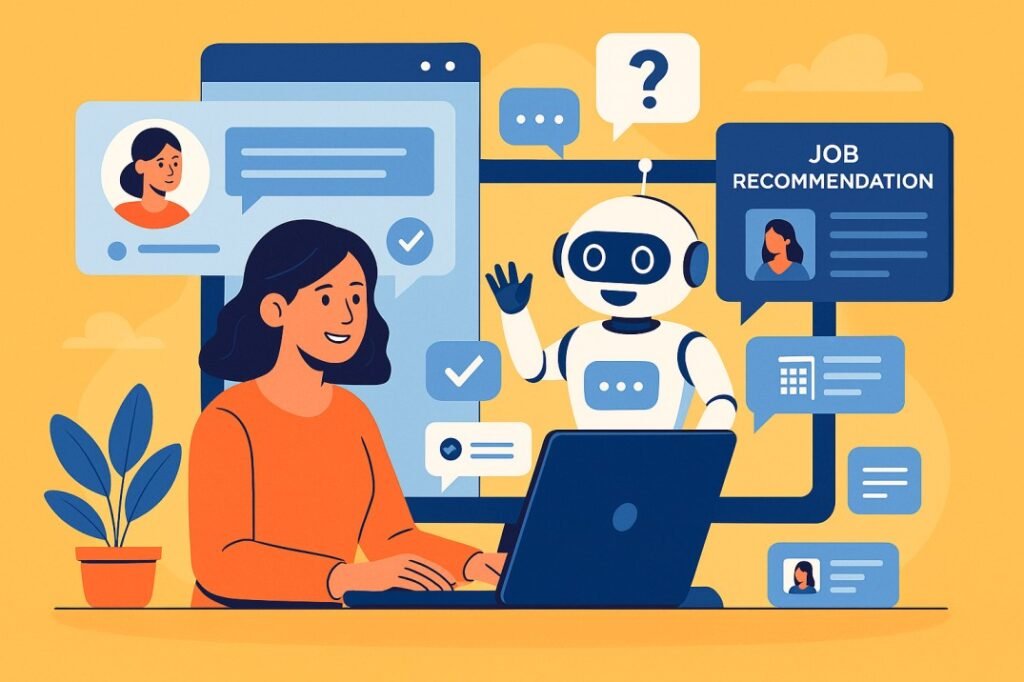
In light of these insights, it’s evident that AI tools, when chosen and used properly, can revolutionize recruiting. They act as force multipliers for startups and hiring teams, allowing you to achieve more with fewer resources. The tools we compared earlier – from Workable’s user-friendly AI to Paradox’s engaging chatbot – all deliver some combination of the benefits we just discussed. It comes down to your team’s needs: do you need to save time, cut costs, improve hire quality, enhance the candidate journey, or all of the above? There’s likely an AI solution (or a combination of them) that can check those boxes for you.
Before we wrap up, one more transitional thought: adopting AI in recruitment is not an all-or-nothing proposition. You can start small – perhaps implement an AI resume screening plugin with your existing ATS – and measure the impact. Many teams pilot one tool, see results, and then expand usage or add other AI components gradually. What’s important is to start experimenting and learning. As the saying goes, “in the race for talent, time is of the essence”, and AI can help ensure you’re not left trailing behind due to avoidable delays or biases.
Conclusion: Embrace AI Recruiting and Stay Ahead of the Talent Curve
Recruiting the right talent is arguably the most crucial challenge for any organization – and in today’s hyper-competitive market, leveraging AI is becoming a competitive necessity. The good news is that the Best AI Recruitment Tools are more accessible and user-friendly than ever, even for non-technical folks. By integrating these tools into your hiring process, you stand to streamline operations, improve candidate quality, and elevate the experience for everyone involved. It’s a classic win-win: recruiters reclaim their time and sanity, while candidates get quicker, more personalized attention.
As we’ve discussed, AI recruitment software can act as your tireless talent scout, initial interviewer, and data analyst – but you remain the coach, making the final call and building the relationships. Those companies that figure out the right balance are seeing fantastic results: faster hiring cycles, lower costs per hire, and teams that are stronger and more diverse.
So, what’s next for you? We recommend taking a proactive step: pick one area of your hiring funnel that causes the most pain, and try an AI tool focused on that. Perhaps too many resumes is your issue – consider an AI screening tool. Or maybe candidates drop off due to slow responses – try a chatbot. Many of the platforms we listed offer free trials or demos, so you can see the magic in action with no commitment.
Don’t Get Left Behind
The hiring landscape is evolving quickly, and those who embrace new technology early often reap the biggest rewards. If you found this guide helpful, make sure to subscribe to our newsletter for more deep dives on HR tech and startup growth strategies. We regularly share insights on topics like improving onboarding with AI, building inclusive hiring practices, and more. Also, feel free to share this postwith fellow founders or HR leaders who might be grappling with hiring challenges – they’ll thank you for the pointers (and you’ll look like a forward-thinking talent guru!).
In summary, the future of recruitment is here, and it’s brilliantly augmented by AI. By integrating the right tools and maintaining a human touch, you can create a hiring process that’s efficient, engaging, and effective. Happy recruiting, and here’s to finding the perfect hires with a little help from our AI friends!